
Last week, the Middle East once again found itself at the centre of global attention. The escalating conflicts are raising concerns about the stability of oil in the global wholesale energy market. Those operating within trading circles, have felt the effects of these developments as oil prices responded erratically to these events.
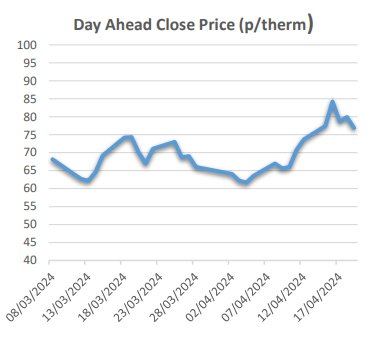
Last Friday morning, contract prices held fairly steady, however as the day went on, wholesale energy market prices decreased. The contract that saw the most movement was the June-24 contract that decreased 4.25p/therm in comparison with its previous settlement.
What does this mean?
Initially, reports of tensions in the middle east sent oil prices soaring, mostly because of concerns over potential disruptions to oil supplies. The Strait of Hormuz, which is a critical route for oil tankers is the main focus of anticipation. However, Iranian media eased these concerns by indicating that there was no damage.
In other energy news, key pipelines connecting the UK to Belgium and the Netherlands is due for maintenance in September. This offers some hope for increased gas availability in the UK market as the UK can retain more gas. However, with a series of outages in the Nyhamna field (Norway), supply issues are still causing energy industry stakeholders to worry, along with what is set to be a prolonged challenge in the Middle East.
Summary
Unexpectedly, the wholesale energy market saw a recent dip in prices as outages ceased and essential infrastructure in the Middle East remained intact. However that can all change overnight, as seen by additional issues like the pipeline maintenance from UK to Belgium and Netherlands, and outages experienced in Nyhamna field (Norway). Therefore, energy industry stakeholders will have to remain alert during the months to come.
Contact us to find out how much you could save on your business energy bill
↓
For more information on gas and energy for businesses, check out these websites: